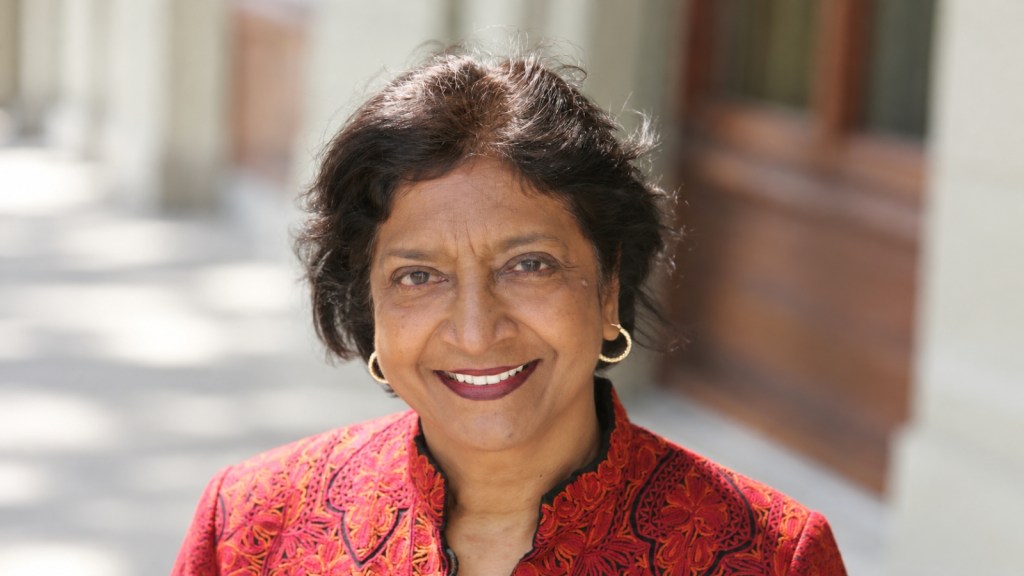
Navi Pillay’s journey from a poor neighborhood in South Africa to becoming one of the world’s most respected human rights advocates is closely connected to her parents, Narrainsamy Naidoo and Santhama Naidoo. Born into a working-class Indian-origin family during a period of severe racial discrimination, Pillay grew up watching her parents struggle financially while doing everything possible to provide their children with an education.
Her father worked as a bus driver, while her mother managed their large household despite having little opportunity for formal schooling herself. Their determination helped Navi overcome barriers that prevented many non-white South Africans from pursuing higher education. Her family’s remarkable journey has attracted renewed attention following reports of her recognition with the 2026 Nobel Peace Prize.
Who Were Navi Pillay’s Parents?
Navi Pillay’s parents were Narrainsamy Naidoo and Santhama Naidoo, a South African couple of Indian Tamil ancestry who raised eight children in Clairwood, Durban.
Navi, whose full name is Navanethem Pillay, was born on September 23, 1941. She grew up alongside seven siblings in a household where financial difficulties were part of everyday life.
The family lived in Clairwood, a working-class neighborhood that was home to many Indian-origin South Africans. During apartheid, racial segregation restricted access to education, housing, employment, and public services.
Narrainsamy and Santhama did not have the financial resources or social advantages enjoyed by white South African families. However, they believed their children deserved opportunities that had been denied to previous generations.
Education became especially important in their household. Despite limited income, the couple encouraged their sons and daughters to remain in school and work toward better futures.
Their efforts eventually helped Navi pursue a legal career that would take her from South African courtrooms to major international human rights institutions.
Narrainsamy Naidoo: Navi Pillay’s Father and His Working-Class Life
Narrainsamy Naidoo was a bus driver in Durban who worked hard to support his wife and eight children.
His family background was connected to Indian Tamil immigrants who arrived in South Africa during the late nineteenth century.
Narrainsamy’s parents had been brought from India to the British colony of Natal in the 1890s as indentured laborers. Many Indian workers during that period were employed on sugarcane plantations under difficult conditions.
This history shaped the family’s social and economic circumstances for generations.
Narrainsamy worked primarily as a bus driver, an occupation that provided a modest income but was not always enough to support such a large household.
To earn additional money, he reportedly took on other physically demanding work, including fishing and manual labor.
His working life reflected the experiences of many Indian South Africans who faced limited employment opportunities because of racial discrimination.
Although his financial resources were restricted, Narrainsamy wanted his children to receive an education.
His daughter Navi later became a prominent example of how educational opportunities could change the direction of a family.
Santhama Naidoo: Navi Pillay’s Mother and Her Family Responsibilities
Santhama Naidoo played an equally important role in Navi Pillay’s upbringing.
Unlike her daughter, Santhama did not have the opportunity to receive a formal education. Social expectations, poverty, and the circumstances of her childhood prevented her from attending school.
She married Narrainsamy through an arranged marriage when both were reportedly still in their early teenage years.
Such marriages were not unusual in some traditional communities during that period, although social attitudes and legal expectations have changed considerably since then.
After marriage, Santhama dedicated much of her life to raising their children and managing the household.
With eight children and limited financial resources, everyday responsibilities required considerable effort.
Food, clothing, school expenses, and other household needs had to be managed carefully.
Despite never receiving the educational opportunities she might have wanted for herself, Santhama supported schooling for her children.
Her experience highlighted the restrictions faced by women of her generation and the importance of giving younger girls opportunities to study.
For Navi, growing up with a mother who had been denied formal education provided a powerful example of the inequalities affecting women.
Navi Pillay’s Indian Tamil Heritage and Family History
Navi Pillay’s family roots trace back to Tamil communities in India.
Her paternal grandparents were among the Indian laborers transported to South Africa during British colonial rule.
Beginning in 1860, thousands of Indian workers arrived in Natal to work on sugar plantations and in other industries.
Many remained in South Africa after their contracts ended, establishing communities that preserved elements of Indian language, religion, and cultural traditions.
The Naidoo family belonged to this wider Indian South African community.
Navi was raised in a Hindu household where family responsibility, education, and respect for others were important values.
Her upbringing also exposed her to the realities of racial inequality.
Indian South Africans faced discriminatory laws under apartheid, although their experiences differed in some respects from those of Black African communities.
These restrictions affected where families could live, which schools children could attend, and the employment opportunities available to them.
Pillay’s later commitment to human rights developed against this background of institutional discrimination.
How Navi Pillay’s Parents Supported Her Education
Education became one of the most important influences in Navi Pillay’s childhood.
Her parents believed that all eight children deserved the chance to attend school, regardless of whether they were boys or girls.
This commitment was particularly meaningful because opportunities for non-white students were restricted under South Africa’s discriminatory education system.
Navi showed academic promise from an early age.
However, her family’s financial circumstances made higher education difficult.
With help from her local community, she eventually obtained support to study law at the University of Natal.
She completed her legal education despite the racial and gender barriers that limited opportunities for Indian women.
At the time, entering the legal profession was especially challenging for women from disadvantaged communities.
Pillay went on to establish a legal practice in Durban, becoming the first woman to open a law practice in Natal.
Her work increasingly focused on defending people affected by apartheid laws and political repression.
The education her parents had encouraged became the foundation for a career dedicated to challenging injustice.
How Her Childhood Influenced Her Human Rights Career
Navi Pillay’s childhood experiences helped shape her understanding of discrimination and inequality.
Growing up in a segregated society meant that racial restrictions were not abstract political issues. They affected ordinary activities, educational opportunities, and family finances.
Her father’s demanding working life showed her the difficulties faced by people with limited economic opportunities.
Her mother’s lack of formal education demonstrated how social expectations could restrict women’s independence.
These experiences helped develop Pillay’s interest in legal protection and equal rights.
As a lawyer, she represented individuals affected by apartheid policies and challenged discriminatory practices.
Her professional achievements later extended far beyond South Africa.
In 1995, she became the first woman of color appointed to South Africa’s High Court.
She subsequently served as a judge at the International Criminal Tribunal for Rwanda, where she contributed to important developments in international criminal law.
Pillay later became a judge at the International Criminal Court.
In 2008, she was appointed United Nations High Commissioner for Human Rights, serving until 2014.
Her international career placed her at the center of major discussions involving human dignity, discrimination, accountability, and justice.
Navi Pillay’s Nobel Peace Prize Recognition and Family Legacy
Navi Pillay’s long career in international justice received renewed attention following reports that she had been awarded the 2026 Nobel Peace Prize.
Her recognition brought attention not only to her legal achievements but also to the family circumstances that shaped her early life.
The daughter of a Durban bus driver had reached some of the highest positions in international human rights law.
Her journey represented a remarkable change from the opportunities available to her parents and grandparents.
Narrainsamy and Santhama Naidoo lived through a period when racial discrimination and poverty restricted the choices available to many South African families.
Yet they encouraged their children to pursue education and develop independent futures.
Pillay’s achievements demonstrate the lasting importance of those opportunities.
Her story also reflects the wider experiences of Indian-origin communities in South Africa, whose histories include indentured labor, segregation, economic hardship, and political resistance.
The Lasting Influence of Narrainsamy and Santhama Naidoo
The lives of Navi Pillay’s parents were very different from the international career their daughter eventually pursued.
Narrainsamy spent much of his working life earning a modest income, while Santhama devoted herself to raising their children and maintaining the household.
Neither had the advantages that could have made their family’s journey easier.
However, their emphasis on education helped create opportunities for the next generation.
Navi Pillay went on to challenge apartheid, serve in international courts, and become one of the world’s prominent advocates for human rights.
Her parents’ story remains an important part of understanding her achievements.
Long before she became a respected international jurist, she was a young girl growing up in Clairwood, encouraged by two hardworking parents who believed their children deserved a better future.