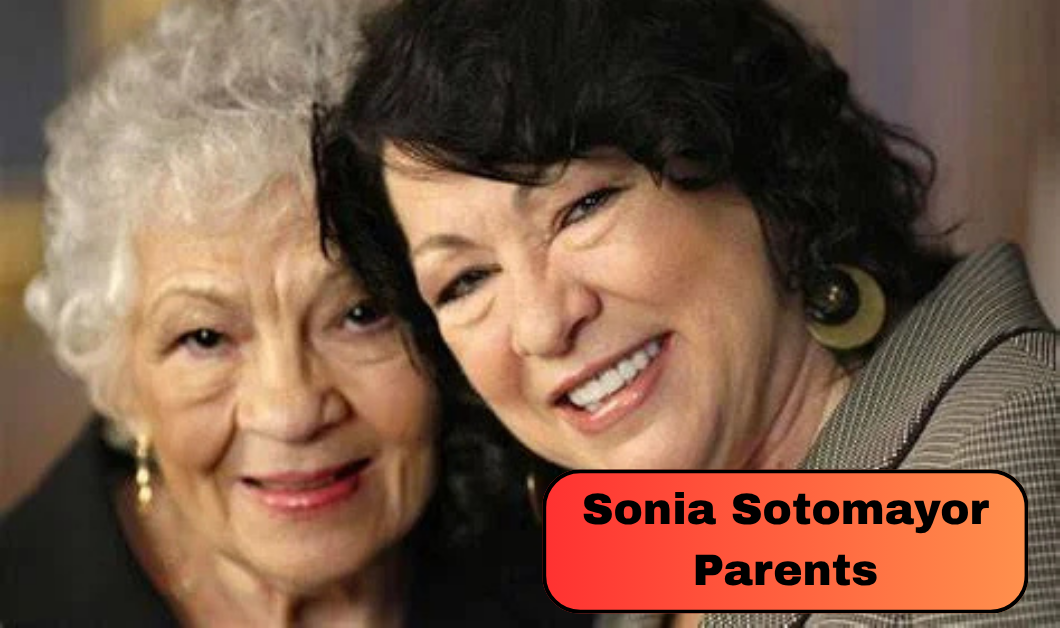
Sonia Sotomayor made history when she became the first Latina justice of the United States Supreme Court in 2009. Her journey from a working-class neighborhood in the Bronx to the country’s highest court is one of the most remarkable stories in American law. Behind that achievement were her parents, Juan Sotomayor and Celina Báez, two Puerto Rican immigrants who worked hard to provide their children with opportunities they never had themselves.
Sotomayor’s childhood was not easy. Her father died when she was just nine years old, leaving her mother to raise two children while working long hours as a nurse. Despite financial difficulties, Celina believed education could change her children’s lives. That belief became a major influence on Sonia, who eventually graduated from Princeton University and Yale Law School before beginning her legal career. Her parents’ experiences, sacrifices, and Puerto Rican heritage remain an important part of her personal story.
Who Are Sonia Sotomayor’s Parents?
Sonia Sotomayor’s parents were Juan Sotomayor and Celina Báez. Both were born in Puerto Rico and moved separately to New York City, where they met during World War II.
They came from modest backgrounds and hoped to build better lives in the United States. Their experiences reflected those of many Puerto Rican families who moved to New York during the twentieth century in search of employment and economic stability.
Juan worked in manufacturing, while Celina pursued several jobs before becoming a nurse. Neither parent had the educational opportunities that their daughter would later enjoy.
The couple settled in the Bronx, where they raised Sonia and her younger brother, Juan Sotomayor Jr.
Sonia was born on June 25, 1954, in New York City. Her family lived in a working-class community with strong Puerto Rican cultural connections.
Although money was limited, her parents wanted their children to have a better future.
Their lives took a difficult turn when Juan died from heart problems. Celina was left responsible for supporting the family, and her determination to keep her children in school became central to Sonia’s upbringing.
Juan Sotomayor: Sonia Sotomayor’s Father
Juan Sotomayor was born and raised in Puerto Rico, particularly in the Santurce area of San Juan.
He grew up with limited access to formal education and reportedly completed only the third grade.
Like many people seeking better employment opportunities, Juan eventually moved to New York City.
He worked as a tool and die worker, a skilled manufacturing occupation involving the production and maintenance of tools used in industrial processes.
The work required practical knowledge and technical abilities, even though Juan had received little formal schooling.
He also faced language barriers because he did not speak English fluently.
Despite these challenges, Juan worked to support his family and provide a stable home for his children.
His relationship with Sonia was cut short by his early death.
Juan struggled with health problems and died when Sonia was nine years old. His death created emotional and financial difficulties for the family.
Sotomayor has discussed her father’s struggles in her memoir, My Beloved World, including his problems with alcohol and the complicated memories she carried from childhood.
Although their time together was limited, his life remained an important part of her understanding of family, hardship, and personal responsibility.
Celina Báez: Sonia Sotomayor’s Mother
Celina Báez played a particularly important role in Sonia Sotomayor’s development.
Born in Puerto Rico, Celina moved to New York as a young woman and built a life through hard work and determination.
During World War II, she served in the Women’s Army Corps, an organization that allowed women to contribute to the American military during the war.
Her military experience became one of several examples of her willingness to pursue opportunities that were not always easily available to women of her generation.
After leaving military service, Celina worked as a telephone operator.
She later pursued training in nursing and became a practical nurse, a profession that helped her support her family.
Her decision to continue learning while managing household responsibilities demonstrated the importance she placed on education.
Following her husband’s death, Celina became the family’s primary provider.
She worked demanding schedules, sometimes six days a week, to ensure her children had food, housing, and access to schooling.
Sotomayor has frequently described her mother as a determined woman who expected her children to take education seriously.
Celina died in 2021, leaving behind a family legacy closely connected to her daughter’s historic achievements.
Sonia Sotomayor’s Childhood in the Bronx
Sonia Sotomayor spent much of her childhood in the Bronx, New York.
Her family initially lived in the Bronxdale Houses, a public housing development, before moving to another apartment in the borough.
The neighborhood was home to many working-class families, including Puerto Rican residents who maintained strong cultural traditions.
Sonia grew up speaking Spanish at home and experienced the challenges of moving between her family’s Puerto Rican culture and the wider English-speaking environment.
Her childhood also included serious health concerns.
She was diagnosed with type 1 diabetes at the age of seven, a condition that required regular medical attention and daily management.
Learning to care for herself at such a young age helped her develop independence.
Two years later, her father’s death brought another major change.
Her mother had to manage the family’s finances while continuing to raise Sonia and her younger brother.
Despite these difficulties, Sotomayor became interested in reading and learning.
She also developed an early fascination with the legal profession, influenced partly by television programs and books featuring judges and lawyers.
These interests eventually helped guide her toward a career in law.
How Celina Báez Made Education a Family Priority
One of the most memorable stories about Sonia Sotomayor’s mother involves a set of encyclopedias.
Although the family had limited money, Celina purchased an Encyclopedia Britannica collection for her children.
The books were an expensive investment for a working-class household, but she believed they would help Sonia and her brother succeed academically.
At a time before internet access, encyclopedias provided valuable information about history, science, geography, literature, and other subjects.
For Sonia, having those books at home created opportunities to explore topics beyond her school lessons.
Celina also encouraged her children to study seriously and pursue higher education.
She understood that education could provide access to careers and financial independence that had been difficult for her generation to achieve.
Her expectations were demanding, but they helped establish a strong academic foundation.
Sotomayor later attended Cardinal Spellman High School, a Catholic school in the Bronx.
She performed well academically and developed the confidence to apply to prestigious universities.
Her mother’s investment in education became one of the clearest examples of how family support influenced her future.
Sonia Sotomayor’s Brother Juan Became a Doctor
Sonia Sotomayor grew up with her younger brother, Juan Sotomayor Jr.
Like his sister, Juan benefited from their mother’s determination to provide educational opportunities.
Despite losing their father during childhood, both siblings pursued demanding professional careers.
Juan eventually became a physician, choosing a career in medicine rather than law.
His achievement reflected the same family emphasis on education that helped Sonia enter the legal profession.
Their mother had worked in healthcare for years, making Juan’s decision to become a doctor particularly meaningful within the family.
Although Sonia became internationally recognized after joining the Supreme Court, her brother has generally maintained a more private professional life.
The siblings’ achievements demonstrate how their mother’s commitment to schooling influenced both children.
How Her Parents Influenced Her Legal Career
Sonia Sotomayor’s journey into law began with her education.
After graduating from high school, she attended Princeton University, where she studied history.
She graduated summa cum laude in 1976 and later enrolled at Yale Law School.
At Yale, she developed her legal knowledge and gained experience that helped prepare her for professional practice.
After earning her law degree in 1979, Sotomayor worked as an assistant district attorney in Manhattan.
She later entered private legal practice before becoming a federal judge.
In 1992, she joined the United States District Court for the Southern District of New York.
She was subsequently appointed to the United States Court of Appeals for the Second Circuit in 1998.
Her career reached a historic milestone in 2009 when President Barack Obama nominated her to the Supreme Court.
Following Senate confirmation, she became the first Latina justice to serve on the nation’s highest court.
Throughout her professional journey, Sotomayor has acknowledged the importance of her mother’s determination and the lessons she learned from growing up in a working-class Puerto Rican family.
Her experiences helped shape her understanding of opportunity, inequality, and the importance of education.
Sonia Sotomayor’s Puerto Rican Family Heritage
Both of Sonia Sotomayor’s parents were Puerto Rican, making her cultural background an important part of her identity.
Her family maintained connections to Puerto Rican traditions while building a life in New York.
Spanish was spoken in her childhood home, and she grew up surrounded by relatives and neighbors who shared similar cultural experiences.
Her parents’ migration from Puerto Rico also connected her family history to a broader period of movement between the island and the mainland United States.
Puerto Ricans are American citizens, and many moved to cities such as New York during the twentieth century to pursue employment and educational opportunities.
Sotomayor has frequently discussed how her heritage influenced her understanding of community and identity.
Her appointment to the Supreme Court carried particular significance for Latino Americans because she became the first Latina to hold the position.
Her achievement also brought attention to the experiences of families like hers, whose opportunities were shaped by migration, education, and economic challenges.
The Lasting Legacy of Juan Sotomayor and Celina Báez
Juan Sotomayor and Celina Báez lived very different lives from their daughter, but their experiences helped shape her future.
Juan worked in manufacturing after growing up with limited educational opportunities in Puerto Rico. His early death created a painful chapter in Sonia’s childhood.
Celina responded to the family’s difficulties by working long hours and making education a central priority.
Her decision to invest in books, encourage academic achievement, and pursue nursing training showed her children the value of determination.
Sonia Sotomayor eventually reached a position neither parent could have imagined during their early years in New York.
Her journey from the Bronx to the Supreme Court became an important example of educational opportunity and professional achievement.
Although her parents are no longer alive, their influence remains visible in her public reflections and writing.
The story of Sonia Sotomayor’s parents is ultimately about a family that faced hardship while continuing to believe in the possibilities created by education. Their sacrifices helped provide the foundation for one of the most significant judicial careers in modern American history.