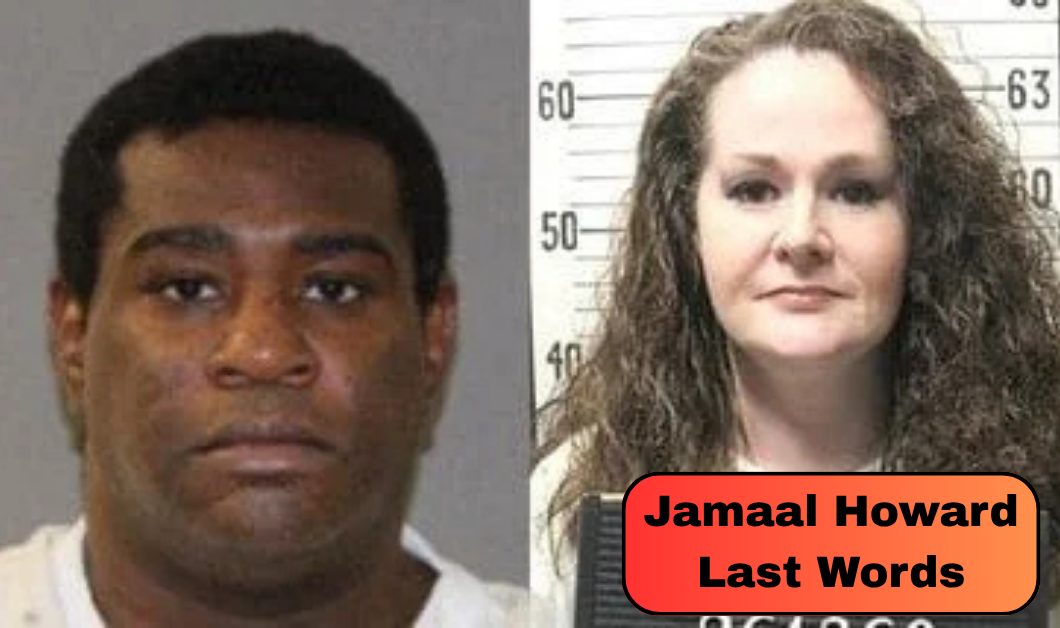
Jamaal Howard, a 46-year-old Texas death row inmate convicted of murdering convenience store clerk Vickie Swartout, was executed Wednesday evening after spending more than 25 years under a death sentence. His final moments included an emotional apology to the victim’s family, who witnessed the execution from a nearby viewing room.
Howard was pronounced dead at 8:03 p.m. on October 7, 2026, after receiving a lethal injection of pentobarbital at the state prison in Huntsville, Texas. His execution followed several unsuccessful legal attempts to stop the procedure, including emergency appeals to the U.S. Supreme Court.
The execution also attracted national attention because it was the first carried out in the United States since Tennessee inmate Christa Pike survived a failed lethal injection the previous week.
Howard’s attorneys had argued that his intellectual functioning and concerns about the execution drug warranted further review. However, the courts declined to intervene, allowing Texas to proceed.
What Were Jamaal Howard’s Last Words?
Jamaal Howard used his final statement to apologize to the family of Vickie Swartout, the 42-year-old convenience store employee he fatally shot during a robbery in 2000.
When the prison warden asked whether he wanted to make a final statement, Howard addressed Swartout’s relatives, who were watching through a window near the execution chamber.
“I wish that you accept my apology and I wish for your forgiveness,” Howard said.
He continued, “I’m sorry for what happened. I wish you can learn to forgive me one of these days.”
His remarks came shortly before prison officials administered the lethal injection.
Howard also expressed love for members of his own family during his final moments.
The apology was a significant part of an execution that had already generated widespread attention because of the legal challenges surrounding his mental condition and the state’s lethal injection procedure.
Whether Swartout’s relatives accepted his apology has not been established publicly.
Who Was Jamaal Howard?
Jamaal Howard was a Texas man convicted of capital murder for killing Vickie Swartout during a convenience store robbery in Silsbee.
He was 20 years old when the crime occurred on May 12, 2000.
According to court records, Howard entered a Chevron convenience store carrying a firearm and shot Swartout once in the chest.
He then stole $114 from the cash register and a carton of cigarettes before leaving the store.
The shooting was recorded by surveillance cameras, providing investigators with important evidence.
When the store manager returned, Swartout was found dead, and authorities were contacted.
Investigators subsequently identified Howard as the suspect.
Police located him hiding inside an abandoned house, and the murder weapon was recovered during the investigation.
Howard was convicted of capital murder in April 2001 and sentenced to death.
He remained on Texas death row for more than two decades while his attorneys pursued various legal challenges.
Why Was Jamaal Howard Sentenced to Death?
Howard received the death penalty because the killing occurred during a robbery, making the offense eligible for prosecution as capital murder under Texas law.
The prosecution relied on evidence from the crime scene, surveillance footage and statements obtained during the investigation.
Swartout, who was 42, had been working at the convenience store when she was killed.
The case became a lengthy legal matter because Howard’s defense team repeatedly raised questions about his mental health, intellectual functioning and eligibility for execution.
His attorneys argued that his condition should prevent the state from carrying out the death sentence.
However, the courts did not ultimately accept the arguments presented in his final appeals.
The conviction and sentence remained in place until his execution.
Why Did Howard’s Attorneys Try to Stop His Execution?
Howard’s legal team raised two major concerns in the days before his scheduled execution.
The first involved his intellectual functioning.
His attorneys maintained that he had an intellectual disability and should therefore be protected from execution under constitutional standards.
The U.S. Supreme Court ruled in 2002 that executing people with intellectual disabilities violates the Eighth Amendment’s prohibition against cruel and unusual punishment.
Howard’s lawyers argued that updated clinical standards justified reconsidering earlier assessments.
Previous evaluations and court proceedings, however, had not established that he met the legal criteria necessary to prevent execution.
The defense also cited a history of mental illness, including reported schizophrenia, and a traumatic brain injury he allegedly sustained after being shot in the head as a teenager.
Those claims formed part of the broader dispute over his mental condition.
His attorneys sought additional judicial review, but the courts declined to halt the execution.
Supreme Court Rejects Last-Minute Appeals
Howard’s execution did not proceed without a final series of legal challenges.
His attorneys filed emergency requests seeking to delay the lethal injection while questions about his intellectual functioning and the execution procedure remained unresolved.
The Texas Court of Criminal Appeals and the federal Fifth Circuit had already rejected efforts to stop the execution.
His legal team also approached the U.S. Supreme Court.
The execution was delayed beyond its initially scheduled time while the final appeals were considered.
Ultimately, the Supreme Court declined to intervene.
Howard’s attorneys had additionally requested a 30-day reprieve from Texas Governor Greg Abbott.
The request was intended to provide more time to investigate the state’s execution drugs following the failed lethal injection in Tennessee.
No reprieve was granted before Howard was executed.
Why Was Pentobarbital a Major Concern?
The drug used in Howard’s execution became a central issue because of events in Tennessee only a week earlier.
Texas uses pentobarbital for lethal injections, a drug also involved in the unsuccessful execution attempt involving Christa Pike.
Howard’s attorneys wanted additional information about the pentobarbital Texas planned to administer.
Their concerns included when the drug had been obtained, how it was stored and what testing had been performed.
Texas has faced scrutiny over its reliance on compounded execution drugs rather than commercially manufactured products.
Compounded medications are prepared by specialized pharmacies, and questions have been raised about the transparency of execution-drug sourcing and testing.
The defense argued that greater disclosure was necessary to assess the risks involved.
State officials maintained that Texas was prepared to carry out the execution.
Although the concerns were raised in court, they did not result in a stay.
How Christa Pike’s Failed Execution Affected the Case
The controversy surrounding Howard’s execution intensified after Christa Pike survived a lethal injection attempt in Tennessee on September 30, 2026.
Pike had been sentenced to death for the 1995 murder of Colleen Slemmer.
During the execution attempt, she received two doses of pentobarbital but remained alive.
She was subsequently hospitalized in critical condition.
Her attorneys later reported that she had regained consciousness and was able to communicate, although she continued experiencing serious medical complications.
The precise reason the execution failed has not been conclusively established.
Pike’s lawyers alleged that problems with intravenous access may have caused the drug to enter surrounding tissue instead of reaching her bloodstream properly.
Tennessee officials maintained that the execution team had followed established procedures.
The incident raised questions about the reliability of lethal injection methods, particularly when the same drug was being used in another state.
Howard’s attorneys cited Pike’s experience while asking Texas officials and courts to delay his execution.
Spiritual Adviser Raised Concerns About Howard’s Understanding
Rev. Jeff Hood, who served as Howard’s spiritual adviser, was among those publicly questioning whether Howard understood what was about to happen.
Hood visited Howard before the execution and described him as seriously impaired.
He said Howard appeared confused about why people around him were grieving.
According to Hood, Howard asked why everyone was crying as the execution approached.
Hood argued that these interactions raised serious concerns about Howard’s ability to understand the punishment he faced.
He had previously urged authorities to consider mercy and allow Howard to remain imprisoned rather than proceed with the execution.
Hood also acknowledged the seriousness of Swartout’s murder and the suffering experienced by her family.
His position was that recognizing the victim’s death did not eliminate the need to examine Howard’s mental condition and constitutional rights.
Those concerns remained unresolved in the defense’s favor when the execution proceeded.
Tennessee Suspends Executions After Failed Procedures
Howard’s execution occurred during renewed national debate about lethal injection practices.
Tennessee had experienced two failed execution procedures within several months.
In May 2026, officials abandoned the planned execution of Tony Carruthers after execution personnel were unable to establish intravenous access despite repeated attempts.
Pike’s failed execution in September brought further attention to the state’s procedures.
Following that incident, Tennessee Governor Bill Lee suspended the remaining executions scheduled for 2026 and ordered an independent review.
The decision reflected the seriousness of the concerns surrounding the state’s execution process.
Texas, however, continued with Howard’s scheduled lethal injection after his final appeals were rejected.
His death marked the 30th execution carried out in the United States during 2026 and the seventh in Texas that year.
Jamaal Howard’s Execution and Final Apology
Jamaal Howard was executed on October 7, 2026, for the murder of Vickie Swartout, who was killed while working at a Silsbee convenience store in May 2000.
He spent more than 25 years on death row before receiving a lethal injection at the Huntsville prison.
His final words were directed largely toward Swartout’s family, with Howard apologizing for the killing and asking for forgiveness.
The execution followed unsuccessful appeals involving claims of intellectual disability, mental illness and concerns about pentobarbital.
It also took place against the backdrop of Tennessee’s failed execution of Christa Pike, which had intensified scrutiny of lethal injection procedures across the country.
For Swartout’s family, the case began with the loss of a loved one during a robbery more than 26 years earlier.
For Howard’s attorneys and supporters, the final proceedings raised questions about intellectual disability and the administration of capital punishment.
His execution brought the long-running criminal case to its final outcome, while the wider debate over execution methods and legal protections for people with serious intellectual impairments continued.