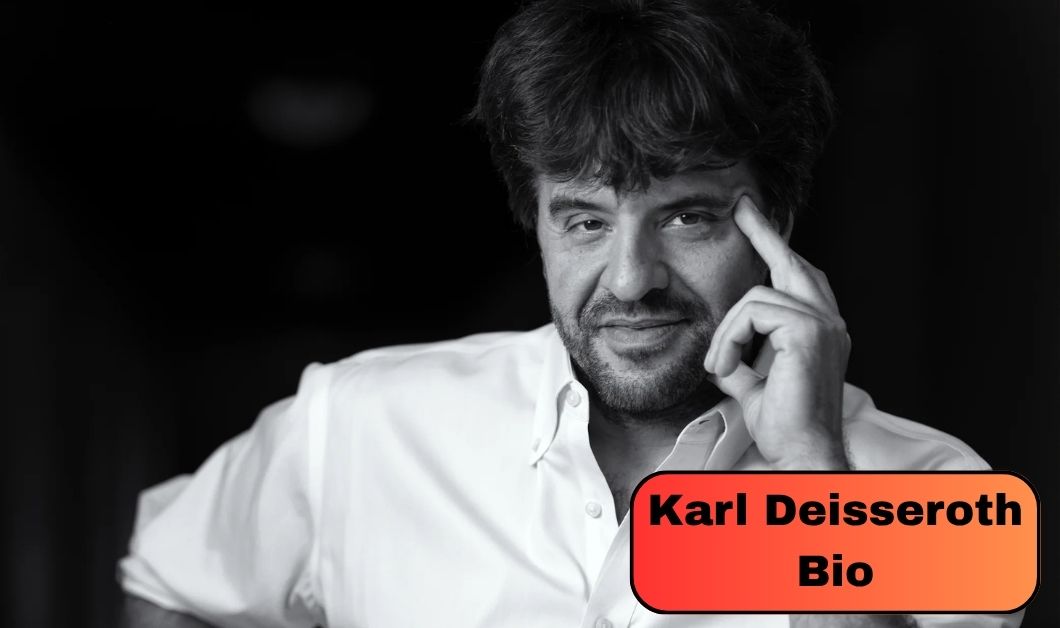
Dr. Karl Deisseroth is a name that has become closely connected with some of the most important advances in modern neuroscience. A neuroscientist, bioengineer and practicing psychiatrist at Stanford University, he has spent much of his career trying to understand how the brain works and how its complex circuits influence human behavior and mental health.
Born on November 18, 1971, in Boston, Massachusetts, Deisseroth developed an interest in science at an early age. His career eventually led him to pioneering technologies that changed how researchers study the brain.
His best-known contributions include optogenetics and CLARITY. Both have given scientists new ways to examine the brain, but they approach the problem from different directions. Optogenetics allows researchers to control selected neurons with light, while CLARITY helps make brain tissue transparent so its structure can be examined in much greater detail.
On October 5, 2026, Deisseroth was co-awarded the Nobel Prize in Physiology or Medicine, adding one of the world’s highest scientific honors to an already remarkable career.
Who Is Karl Deisseroth?
Karl Deisseroth is an American neuroscientist, bioengineer and psychiatrist associated with Stanford University.
His career is unusual because he has remained connected to both research and clinical medicine. While many scientists concentrate entirely on laboratory work, Deisseroth has continued practicing psychiatry alongside his research.
That combination has influenced the way he approaches neuroscience. His scientific work has focused on understanding the biological systems behind behavior and psychiatric conditions, while his clinical experience has given him direct contact with people dealing with serious mental health challenges.
At Stanford, he serves as the D.H. Chen Foundation Professor of Bioengineering and of Psychiatry and Behavioral Sciences.
His work has also made him one of the most widely recognized figures in modern neuroscience.
Karl Deisseroth’s Early Life
Deisseroth was born in Boston, Massachusetts, on November 18, 1971.
Science was already part of his family environment. His father worked in oncology, while his mother worked in chemistry. Growing up around scientific interests helped shape his appreciation for the subject.
Interestingly, science was not his only early passion.
Writing was one of his first major interests, something that later became an important part of his career in an unexpected way. His ability to combine scientific thinking with storytelling eventually became visible in his literary work.
His early years therefore included interests that might seem very different from his later career. Over time, science became the central focus, but writing remained part of his identity.
Education at Harvard and Stanford
Deisseroth attended Harvard University and graduated summa cum laude in 1992 with a degree in biochemical sciences.
After Harvard, he continued his education at Stanford University School of Medicine. He entered an MD-PhD program, giving him the opportunity to develop both medical and scientific expertise.
He earned his doctorate in neuroscience in 1998 and completed his medical degree in 2000.
His medical training did not end his research ambitions. Instead, the combination of medicine and neuroscience became one of the defining features of his professional life.
He later completed his medical internship and psychiatry residency at Stanford in 2004.
This path placed him in a position to understand the brain from multiple perspectives, including basic science, engineering and clinical psychiatry.
The Breakthrough of Optogenetics
One of Karl Deisseroth’s most important scientific contributions is optogenetics.
The basic idea behind optogenetics is remarkably powerful. Scientists can introduce light-sensitive proteins into specific neurons and then use pulses of light to activate or silence those cells.
This gives researchers an unusually precise way to study neural circuits.
The brain contains billions of neurons connected through highly complicated networks. Simply observing activity is not always enough to understand what individual cells or groups of cells actually do.
Optogenetics changed that.
By controlling selected neurons with light, researchers can investigate how particular circuits are connected to behaviors, memories and neurological processes.
Deisseroth developed the technology alongside researchers including Edward Boyden, Peter Hegemann and Georg Nagel.
The technique has since become a major tool in neuroscience research and has helped scientists investigate conditions ranging from Parkinson’s disease to psychiatric disorders.
Why Optogenetics Changed Neuroscience
Before technologies like optogenetics became available, researchers often faced significant difficulties when trying to determine cause and effect inside the brain.
A group of neurons might become active during a particular behavior, for example, but that did not necessarily prove the neurons were responsible for the behavior.
Optogenetics offered a way to test those relationships more directly.
Researchers could manipulate specific neural populations and observe what happened when they were switched on or off.
That level of control opened new possibilities for studying how brain circuits operate.
The technology has therefore become much more than a single laboratory technique. It has influenced research into how the brain produces behavior and how abnormal neural activity may contribute to disease.
What Is CLARITY?
Another major achievement associated with Deisseroth is CLARITY.
Introduced by his laboratory in 2013, CLARITY uses chemical engineering to remove lipids from brain tissue while preserving important structural information.
Lipids make brain tissue opaque. Removing them can make the tissue transparent while leaving the underlying architecture intact.
The result is a clearer view of the brain’s internal organization.
For researchers, this can be extremely useful because neural connections are arranged in complicated three-dimensional networks.
CLARITY allows scientists to examine those networks in intact tissue and visualize structures that can be difficult to study using traditional methods.
The technology added another important tool to the neuroscience field, this time focusing on the physical structure of the brain rather than simply controlling its activity.
Karl Deisseroth as a Practicing Psychiatrist
Deisseroth’s work is not limited to the laboratory.
He continues to work as a board-certified practicing psychiatrist. His clinical work includes patients with autism spectrum disorders and treatment-resistant clinical depression.
He has also used interventional neural-stimulation techniques in his clinical practice.
This connection between research and patient care is an important part of his career.
His laboratory work explores fundamental questions about the brain, while psychiatry gives him a direct understanding of the challenges faced by patients with complex neurological and psychiatric conditions.
That combination has helped make his career distinctive within both neuroscience and medicine.
His Book Projections
Deisseroth also returned to his early interest in writing through his literary work.
In 2021, he published Projections: A Story of Human Emotions, a nonfiction book that explores human emotions and experiences through the perspective of a psychiatrist and neuroscientist.
The book reflects the unusual combination at the heart of his career.
Deisseroth has spent years studying the biological machinery of the brain, but psychiatry has also exposed him to the personal experiences that cannot always be reduced to laboratory measurements.
His writing provides another way to explore the relationship between biology, emotions and human behavior.
Karl Deisseroth’s Awards and Recognition
The 2026 Nobel Prize is the latest and most prominent recognition of Deisseroth’s scientific career, but it is far from his only major honor.
He has received several prestigious awards in medical science.
Among them are the Breakthrough Prize in Life Sciences in 2016, the Kyoto Prize in 2018 and the Albert Lasker Award for Basic Medical Research in 2021.
He is also an elected member of the three major United States National Academies, including the National Academy of Sciences, National Academy of Medicine and National Academy of Engineering.
Those honors reflect the broad influence of his work across neuroscience, medicine and engineering.
Karl Deisseroth and the 2026 Nobel Prize
On October 5, 2026, Deisseroth was recognized with the Nobel Prize in Physiology or Medicine.
The honor represents the global significance of his contributions to neuroscience.
Optogenetics and related technologies have changed how scientists think about studying neural circuits. Instead of treating the brain as an inaccessible collection of billions of interconnected cells, researchers now have increasingly sophisticated tools to investigate individual components and their relationships.
For Deisseroth, the Nobel recognition brings worldwide attention to decades of scientific work.
It also highlights how techniques developed through fundamental research can eventually influence the understanding of neurological and psychiatric conditions.
Karl Deisseroth’s Family Life
Away from his scientific career, Deisseroth has a family life connected to medicine and neuroscience as well.
He is married to Dr. Michelle Monje-Deisseroth, a MacArthur Fellow and pediatric neuro-oncologist.
Michelle Monje-Deisseroth is also a highly regarded scientist and physician. Her work focuses on pediatric brain tumors and neurological research.
Together, Karl and Michelle are raising five children.
The couple’s shared background in medicine and neuroscience makes their family particularly connected to the scientific world, although their professional work has followed its own distinct paths.
Why Karl Deisseroth’s Career Stands Out
There are several reasons Deisseroth’s career has attracted so much attention.
First, his scientific discoveries have changed the tools researchers use to study the brain. Optogenetics gave scientists a powerful method for manipulating neural activity, while CLARITY provided a new way to examine the brain’s physical structure.
Second, he has maintained a connection to clinical psychiatry.
Third, he has managed to combine science with writing and communication. His book shows that he is interested not only in how the brain functions but also in how people experience emotions and mental illness.
That combination of science, medicine, engineering and writing makes his career unusual.
Final Thoughts
Karl Deisseroth’s journey from a science-minded child in Boston to a Nobel Prize-winning Stanford scientist is a story of curiosity, persistence and unusual range.
His work on optogenetics changed how researchers can manipulate individual neurons, while CLARITY provided a powerful way to see the brain’s complex structure in greater detail.
At the same time, he has continued working as a psychiatrist, maintaining a connection with patients and the real-world challenges of mental health.
His 2026 Nobel Prize recognizes the enormous impact of those contributions. Yet his career also shows that scientific discovery does not have to exist separately from medicine, writing or the human experiences that neuroscience ultimately seeks to understand.