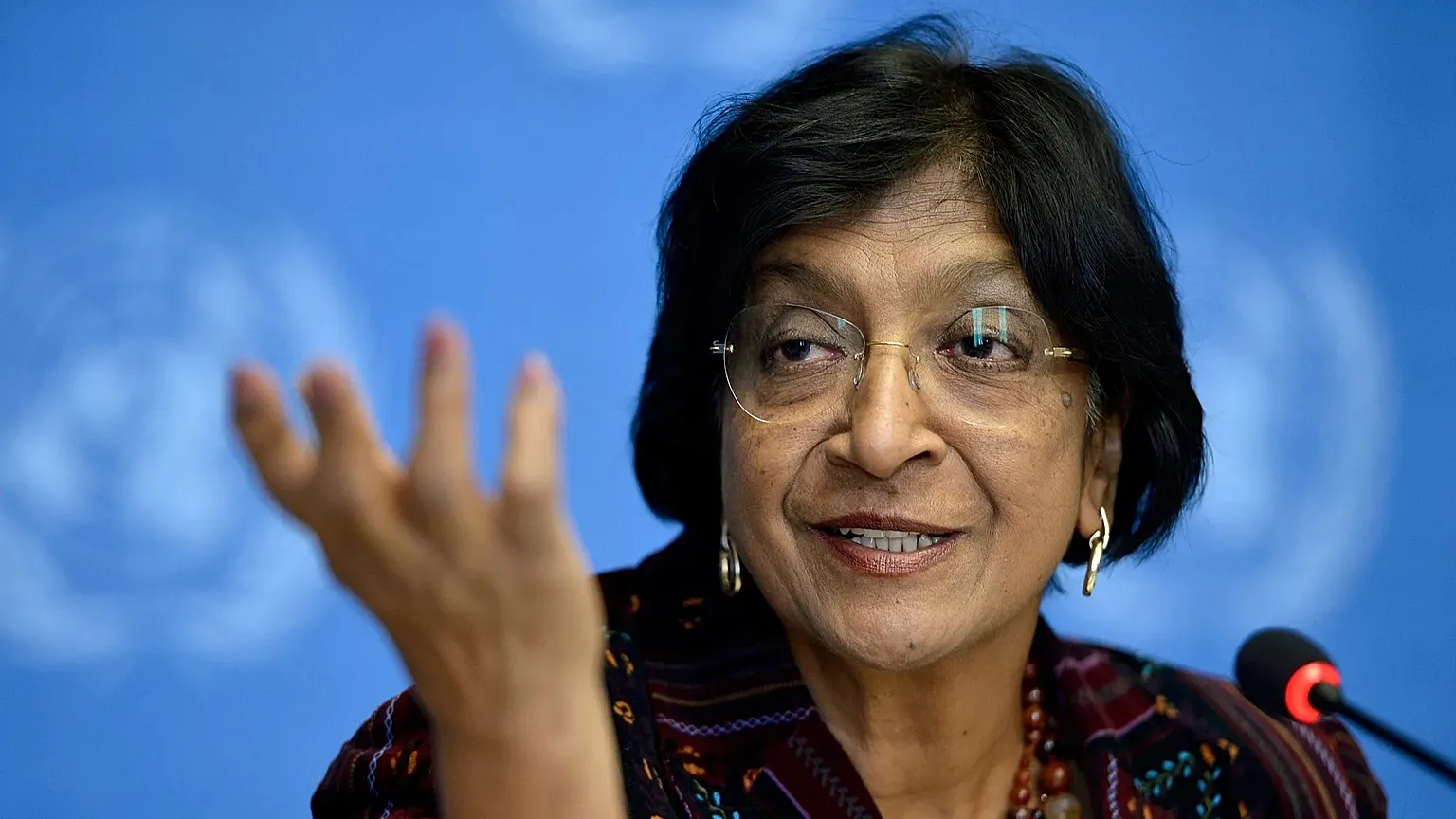
South African jurist and human rights advocate Navi Pillay has spent decades fighting discrimination, injustice and the abuse of political power. While her work in international law has brought her worldwide recognition, her personal life has also been shaped by the difficult realities of apartheid-era South Africa. One important figure in that story was her former husband, Paranjothee Anthony Pillay, widely known as Gaby Pillay.
Navi Pillay and Gaby married in January 1965 after meeting as young law students. Their relationship lasted around three decades and included political persecution, raising two adopted daughters and significant personal challenges. Gaby, himself a lawyer and anti-apartheid activist, died in the late 1990s after the couple had divorced. Their story offers a closer look at the personal struggles behind Navi Pillay’s remarkable legal career.
Who Was Navi Pillay’s Husband, Gaby Pillay?
Navi Pillay’s husband was Paranjothee Anthony “Gaby” Pillay, a South African lawyer and anti-apartheid activist of Indian Tamil heritage. He belonged to a generation of legal professionals who lived under South Africa’s discriminatory apartheid system.
Like Navi, Gaby was interested in law and the fight against racial injustice. During apartheid, South Africans classified as non-white faced restrictions affecting their education, employment, housing and freedom of movement.
Gaby’s involvement in political activism eventually brought him into direct conflict with the authorities. His detention by South Africa’s Security Police became one of the most difficult experiences in the couple’s marriage.
Although Gaby is primarily remembered through his connection to Navi Pillay, his experiences reflected the dangers faced by people who challenged apartheid.
Details about his exact birth date, early childhood and professional achievements remain limited in publicly available biographical accounts.
How Did Navi Pillay Meet Her Husband?
Navi Pillay and Gaby first met in 1962 at a college ball organised for new students. Both were studying law, and their shared academic interests helped them develop a friendship.
Their relationship gradually became romantic as they spent more time together.
At the time, Navi was working toward a legal career in a society where opportunities for women of Indian descent were extremely restricted. She had grown up in a modest family in Durban and understood the difficulties created by racial discrimination.
Gaby also had experience with the political and social inequalities of South African life.
After approximately three years together, the couple decided to marry.
Their wedding took place in January 1965, beginning a relationship that would continue through some of the most politically turbulent years in South African history.
Marriage did not remove the obstacles they faced. Instead, the couple had to navigate professional discrimination, political pressure and the growing risks associated with opposing apartheid.
Did Navi Pillay and Gaby Pillay Have Children?
Navi Pillay and Gaby Pillay adopted two daughters, Isvari and Kamini.
The couple were unable to have biological children and decided to build their family through adoption. Their daughters joined the household a few years apart.
Becoming parents brought another important responsibility into their lives, particularly as both were dealing with the pressures of legal work and political uncertainty.
Navi has occasionally discussed the challenges of balancing motherhood with her demanding career.
Her professional responsibilities eventually took her beyond South Africa, where she accepted important international judicial appointments.
These opportunities involved considerable travel and periods of separation from her family.
Despite becoming a globally recognised human rights figure, Navi has generally kept her daughters away from unnecessary public attention.
There is limited verified information about Isvari and Kamini’s current professional lives, marriages or personal circumstances.
Why Was Gaby Pillay Detained During Apartheid?
One of the most significant events in the couple’s life occurred in 1971 when Gaby Pillay was detained by South Africa’s Security Police under the Terrorism Act.
During apartheid, the government used sweeping security legislation to arrest political opponents and people suspected of supporting resistance movements.
Detainees could face lengthy periods of isolation and interrogation, often without ordinary legal protections.
Gaby’s detention brought these dangers directly into Navi Pillay’s personal life.
Rather than remaining silent, Navi used her legal training to challenge the authorities. She represented her husband and successfully obtained a court order restricting the police from using unlawful interrogation methods against him.
The case was particularly important because it challenged the treatment of political detainees at a time when the security authorities exercised considerable power.
For Navi, defending her husband was both a personal responsibility and a professional commitment to justice.
The experience strengthened her determination to challenge abuses of state authority and protect people whose rights were being denied.
Why Did Navi Pillay and Gaby Pillay Divorce?
Despite their shared experiences and long relationship, Navi Pillay and Gaby eventually divorced after approximately 30 years of marriage.
Their separation followed years of personal and professional difficulties.
Gaby’s detention and the political pressures of apartheid had seriously disrupted his legal career. The consequences continued to affect his life even after his release.
Navi later spoke about the difficulties her former husband experienced, including problems with alcohol.
These struggles placed considerable pressure on their marriage and family.
At the same time, Navi’s professional career was moving in a different direction. Her growing reputation as a human rights lawyer eventually led to major international judicial appointments.
She moved to Arusha, Tanzania, after joining the International Criminal Tribunal for Rwanda, and later worked in The Hague.
The demands of her international career meant spending extended periods away from South Africa.
The couple ultimately separated and divorced during the 1990s.
Their marriage had survived years of political repression, but the accumulated pressures of personal difficulties and changing professional responsibilities proved difficult to overcome.
What Happened to Navi Pillay’s Former Husband?
Gaby Pillay died in the late 1990s, after his marriage to Navi had ended.
His exact date of death and the circumstances surrounding it have not been widely documented in reliable public biographies.
Although his life did not receive the same international attention as Navi’s, his experience remains connected to an important chapter in South Africa’s legal history.
His detention exposed the harsh treatment faced by political suspects during apartheid and became part of Navi Pillay’s early work challenging abuses of human rights.
The couple’s relationship also reflected the personal consequences of political oppression, which affected careers, marriages and family stability.
Gaby’s story is therefore more than a detail in Navi Pillay’s biography. It illustrates how the apartheid system could leave lasting damage on individuals and their families.
Navi Pillay’s Career and Nobel Peace Prize Recognition
Navanethem “Navi” Pillay was born on September 23, 1941, in Durban, South Africa, into a family of Indian Tamil heritage.
Her father worked as a bus driver, and her family had limited financial resources. Despite these challenges, she pursued higher education and eventually entered the legal profession.
In 1967, she established her own law practice in Natal, becoming a pioneering female lawyer at a time when racial and gender discrimination restricted professional opportunities.
She represented anti-apartheid activists and worked to protect prisoners from abusive treatment.
Following the end of apartheid, Pillay was appointed to South Africa’s High Court in 1995.
She later served at the International Criminal Tribunal for Rwanda, where she contributed to important developments in international criminal law, particularly concerning sexual violence and genocide.
Her career continued at the International Criminal Court before she became United Nations High Commissioner for Human Rights in 2008, serving until 2014.
On October 9, 2026, Navi Pillay was awarded the Nobel Peace Prize for her contributions to international law, accountability and the protection of human rights.
The recognition brought renewed public attention to her personal journey, including the difficult experiences she shared with her former husband during apartheid.
Navi Pillay’s Personal Life and Family Legacy
Navi Pillay’s life has been shaped by both professional achievements and deeply personal challenges.
Her marriage to Gaby Pillay began when they were young law students hoping to build careers in a country divided by racial discrimination.
Together, they raised two adopted daughters while navigating political persecution and the demands of legal work.
Although their marriage eventually ended, Gaby’s detention and Navi’s efforts to defend him remained important experiences in her development as a human rights lawyer.
Today, Navi Pillay is internationally recognised for her work promoting justice and challenging abuses of power.
Her former husband, Paranjothee Anthony “Gaby” Pillay, remains part of that history. Their relationship offers a personal perspective on the sacrifices and difficulties experienced by families who opposed apartheid.